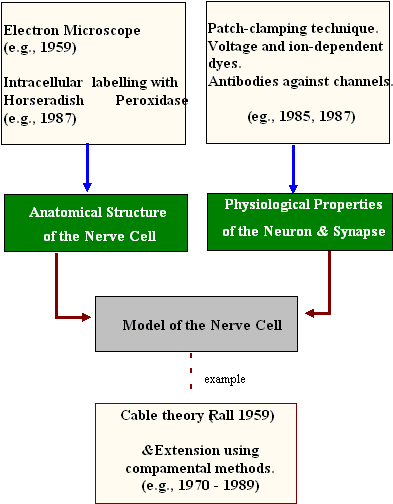
개개의 신경세포 수준에서 정보처리(information
processing)의 완전한 이해를 위해서는
세포의 해부학적인 구조와 뉴런과 시냅스의 기능적 특성,
그리고 이를 충분히 반영시킨 모델과
관련된 세밀한 지식을 요구한다.
문제점: analytical approach using cable theory
examples).
General branching structure(1974-1985) - 해 구하기가 복잡해 짐.
Synaptic currents produced by conductance changes(1974-1986) - 더 복잡해짐.
Voltage-dependent membrane properties - cable theory is no longer valid.
1964년 Rall이
analytical model보다는
compartmental model이
사용되어야 함을 지적.
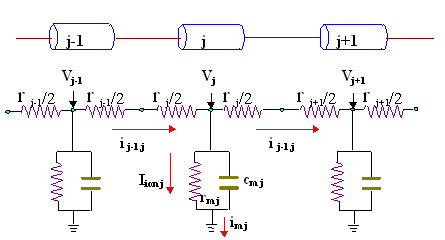
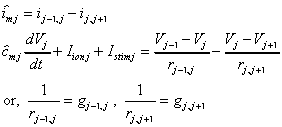 (1)
(1)
앞에서와 같이 회로분석 필요 없이 Cable
equation으로부터 직접적으로
compartmental
equation을 얻는 것도 가능하다.(수치해석의
기초!)
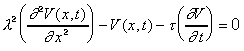
이식에서 공간미분 항을 차분 꼴로 바꾸면
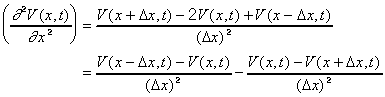
 로 두고
로 두고  로
두어
로
두어
cable equation에
대입하면 compartmental equation과
완전히 같은 식으로 된다.
Three basic classes of ionic channels: Passive(leak), Synaptic, Active
Passive Channel
- : time and voltage independent
transmembrane conductance
: time and voltage independent
transmembrane conductance
- : reversal potential of
the passive channels.
: reversal potential of
the passive channels.

 : "ex.
alpha function" =
: "ex.
alpha function" =
 (Rall 1967; Jack 1975)
where, 
 is the membrane constant,
 is the time-to-peak of the
conductance transient.
is the time-to-peak of the
conductance transient.
- : reversal potential of
the ionic species involved.
: reversal potential of
the ionic species involved.

 : membrane rectification
or action potential
: membrane rectification
or action potential
- 

Total membrane current

식(1)의
좌변에 대입하면 (stimulus current 제외)
